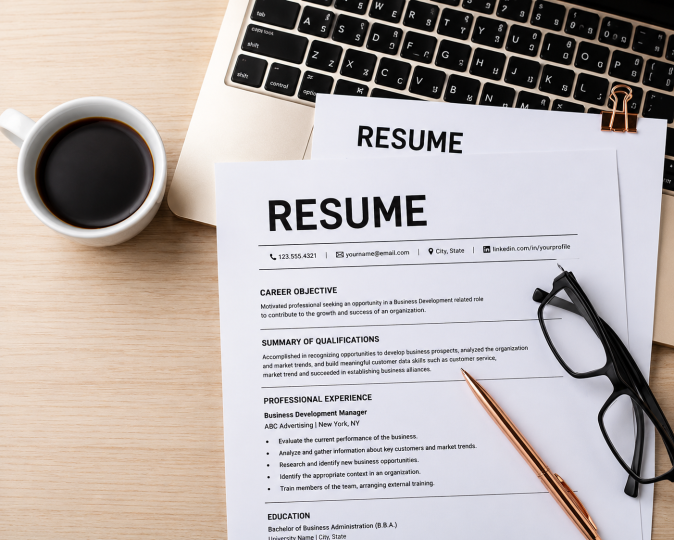
Interview Preparation: A Practical Guide to Performing with Confidence

Interview Preparation: A Practical Guide to Performing with Confidence
Introduction
Why Interview Preparation Matters
An interview gives the employer an opportunity to evaluate more than your education and work history. The interviewer may assess your communication skills, problem-solving ability, professionalism, motivation, and understanding of the role.
Preparation can help you:
* Explain your experience clearly
* Connect your background to the job requirements
* Provide relevant examples
* Reduce nervousness
* Ask thoughtful questions
* Demonstrate genuine interest in the organization
Preparation does not mean memorizing every answer word for word. It means understanding your own experience well enough to discuss it naturally and confidently.
1. Research the Company Like You Already Work There
Before you think about answering questions, focus on gathering information. Interviewers can always tell the difference between a candidate who skimmed the "About Us" page and one who actually understands the business.
Make sure you know:
- What the company does: its products, services, and who its customers are
- Recent news: funding rounds, product launches, leadership changes, or industry challenges
- Company values and culture: often listed on the careers page or reflected in employee reviews
- The role itself: re-read the job description and identify the 3–4 most important responsibilities
A simple test: could you explain, in two sentences, why this company needs someone in this role right now? If you can, you're ready to move to the next step.
2. Master Your Own Story
Interviewers almost always start with some version of "Tell me about yourself." This isn't a formality, it sets the tone for the entire interview.
Structure your answer around three parts:
- Where you've been: a brief snapshot of your background
- What you've done: key experiences or achievements relevant to the role
- Where you're going: why this role, and this company, is the right next step
Keep it under a minute or two. Practice it out loud until it feels natural, not memorized.
3. Prepare for Behavioral Questions Using the STAR Method
Most interviews include questions like:
- "Tell me about a time you faced a conflict at work."
- "Describe a project that didn't go as planned."
- "Give an example of when you showed leadership."
The STAR method keeps your answers structured and compelling:
- Situation: set the scene briefly
- Task: what was your responsibility?
- Action: what did you specifically do?
- Result: what was the outcome, ideally with a number or measurable impact?
Prepare 5–6 STAR stories in advance that cover teamwork, problem-solving, failure/learning, leadership, and conflict resolution. Most behavioral questions can be answered by adapting one of these stories.
4. Know Your CV Inside and Out
Here's something candidates often overlook: your CV is the interview script. Anything on it is fair game for questions. If you list "led a cross-functional project," expect to be asked about it in detail what was the project, who was on the team, what obstacles came up, and what was the result?
This is exactly why a well-structured, honest, and achievement-focused CV matters so much before you even get to the interview stage. If your CV overstates or vaguely describes your experience, it can leave you scrambling for details in the room. A tightly written CV doesn't just get you the interview it sets you up to succeed in it.
5. Prepare Thoughtful Questions for Them
At the end of most interviews, you'll hear: "Do you have any questions for us?" Never say no.
Good questions to ask:
- "What does success look like in this role after the first 6 months?"
- "How would you describe the team's working style?"
- "What are the biggest challenges facing this team right now?"
Avoid questions you could easily answer yourself with a quick search (like basic facts about the company), and save salary/benefits discussions for later stages unless the interviewer brings it up first.
6. Practice Out Loud, Not Just in Your Head
Reading through potential answers mentally feels like preparation, but it isn't the same as speaking them. Rehearse out loud with a friend, in front of a mirror, or by recording yourself. This helps you:
- Catch filler words ("um," "like," "you know")
- Notice if an answer is too long or too short
- Build genuine confidence in your delivery
If possible, do at least one full mock interview before the real one.
7. Handle the Practical Details
Don't let logistics undermine your preparation:
- Video interviews: test your camera, microphone, and internet connection beforehand. Choose a quiet, well-lit space.
- In-person interviews: plan your route and arrive 10–15 minutes early not more.
- Dress code: when in doubt, dress slightly more formally than the company's everyday style.
- Documents: bring extra copies of your CV, a notepad, and any portfolio work relevant to the role.
8. Follow Up the Right Way
Within 24 hours of the interview, send a short thank-you email. Reiterate your interest in the role, briefly reference something specific from the conversation, and keep it concise. This small step is often skipped and it's an easy way to stand out.
Final Thoughts
Interview preparation isn't about memorizing perfect answers, it's about walking in with clarity about who you are, what you've achieved, and why you're the right fit. The candidates who succeed aren't always the most qualified on paper; they're the ones who show up prepared, confident, and genuinely engaged with the opportunity in front of them.
If you'd like support getting to this stage faster, that's exactly what we're here for. From building a CV that opens doors to managing your applications so you can focus on preparing for the interviews that matter, we handle the groundwork so you can walk in ready to land the job.
Frequently Asked Questions About Interview Preparation
1) How long should I prepare for an interview?
The required preparation time depends on the position. Most candidates should spend enough time reviewing the job description, researching the company, preparing examples, and practising common questions. Senior or technical roles may require additional preparation.
2) Should I memorize my interview answers?
No. Memorizing complete answers can make you sound unnatural. Prepare key points and examples so you can respond naturally while remaining focused.
3) How long should my answers be?
Most answers should be between 30 seconds and two minutes. Behavioural questions may require slightly longer responses when using the STAR method.
4) What should I wear to an interview?
Choose professional clothing that matches the workplace and position. It is generally better to be slightly more formal than too casual.
5) What should I bring to an in-person interview?
Bring copies of your CV, a notebook, a pen, identification if required, and any requested documents or portfolio materials.
6) What should I do if I am nervous?
Practise your answers aloud, prepare your materials in advance, arrive early, and take slow breaths before the interview. Remember that the interview is also an opportunity for you to learn about the employer.
7) How should I answer questions about employment gaps?
Be honest and concise. Briefly explain the reason and focus on any productive activities, training, caregiving responsibilities, personal development, or job-search efforts completed during that period.
6) Can I use the same examples for different interview questions?
Yes. A strong workplace example can often be adapted to several questions, but make sure the part you emphasize matches the specific question.
7) What if I do not have direct experience?
Focus on transferable skills, education, volunteer work, projects, internships, and similar responsibilities. Explain how your previous experience can be applied to the new role.
8) Should I ask about salary during the interview?
It depends on the interview stage and whether the employer has raised the topic. Salary discussions are often more appropriate during recruiter screenings, later interview stages, or after the employer expresses serious interest.
9) How many questions should I ask the interviewer?
Prepare at least three to five questions. You may not need to ask all of them because some may be answered during the interview.
10) Should I send a thank-you email?
Yes, when appropriate. A brief and professional thank-you email can reinforce your interest and leave a positive final impression.
11) What is the best way to prepare for a behavioural interview?
Review the job requirements and prepare several STAR examples involving teamwork, problem-solving, deadlines, conflict, leadership, mistakes, and achievements.
12) How can The Next Step International help with interview preparation?
The Next Step International can help candidates understand job requirements, prepare role-specific questions, organize professional examples, improve answer structure, and practise communicating their experience with confidence.
Other Blogs
How to Explain Employment Gaps on a Canadian Resume Without Hurting Your Chances

The First 90 Days: What to Expect After You Land a Job in Canada
Work Permits and Job Offers: What Comes First?

How TNSI Helps You Stand Out with Professional Resumes and Cover Letters